Loading
Product tour
Explore TutorNest
See how the different parts of TutorNest work together for the child, parent and teacher.
Learning worlds
One kingdom at a time
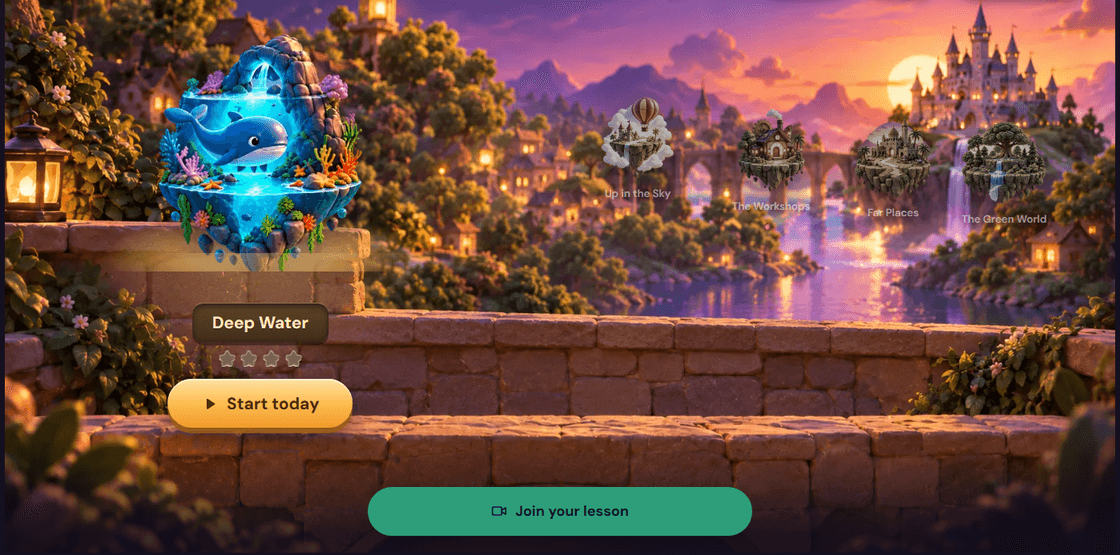
The child lands on one painted place rather than a menu. Her own kingdom stands close and lit, the ones she has not reached yet sit far off, and tapping hers starts today’s practice — one tap from arriving.
A kingdom holds four worlds and fills in as she practices. The next one opens when the one before it is full, so there is always somewhere she is heading and never five choices to weigh up.
Daily practice
Questions that become places
A round is about ten minutes. What it asks changes with what the child is learning and how the last few days went — and how it asks changes with the question: an order at a night-market counter, words on a workbench, a shell on the sand. All three below are the same round, photographed.
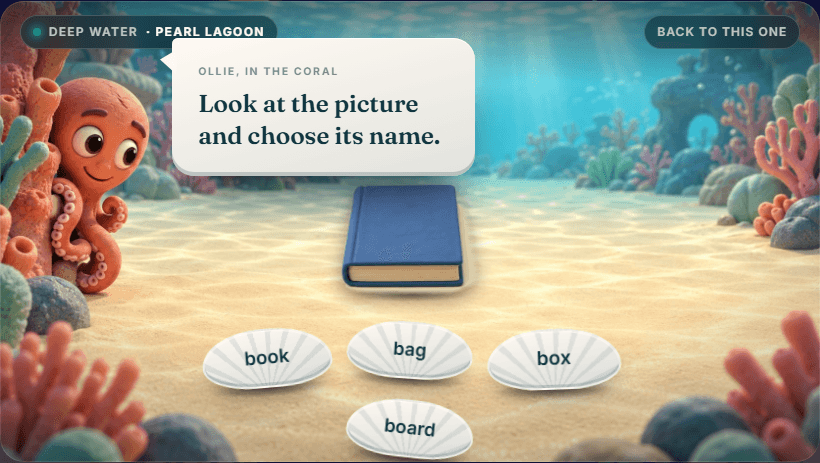
Pick the one that fits — the scene is built from the question. 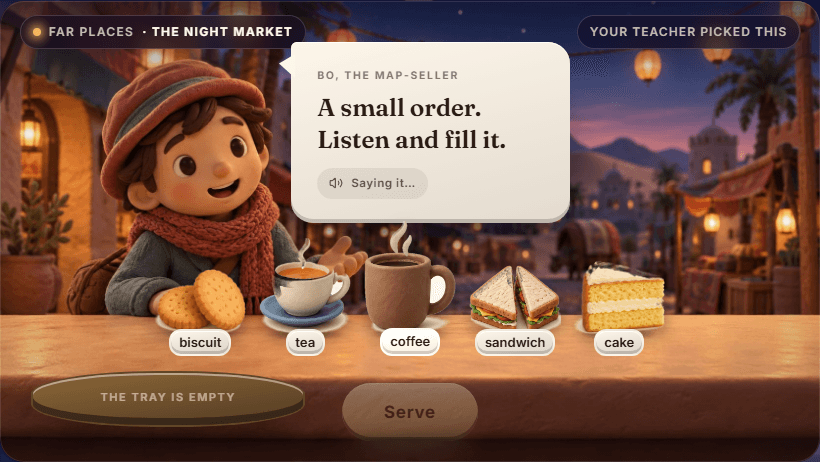
Choose everything the traveler asked for. 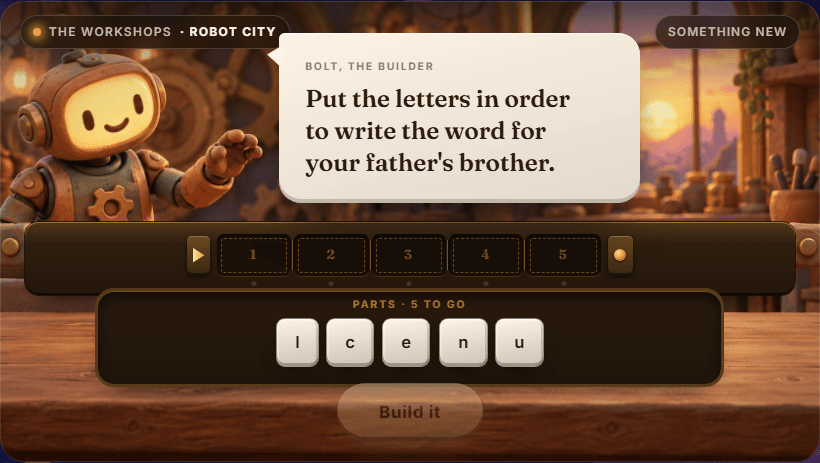
Put the words in order to build the sentence.
Weekly lessons
The teacher stays at the center
The lesson is one to one, on video, at a time the family and the teacher agree. The child joins with the code she already uses — no account, no password — and a parent can see the booking and put it in a calendar without being in the room.
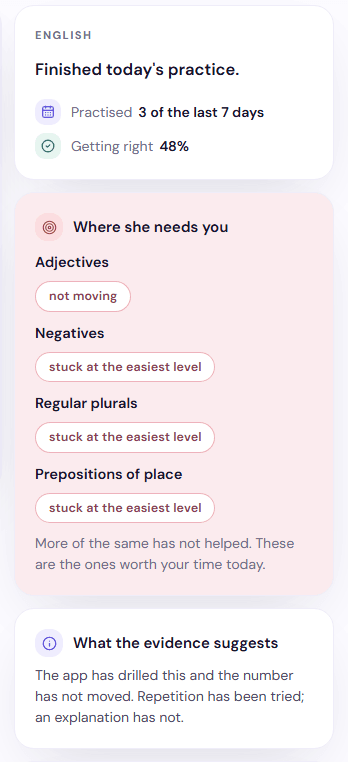
Beside the video the teacher has the week: what was practiced, what improved, and which skills more repetition has already failed to move. The teacher makes the decisions; this is the evidence handed to the person teaching.
For parents
One screen, four answers
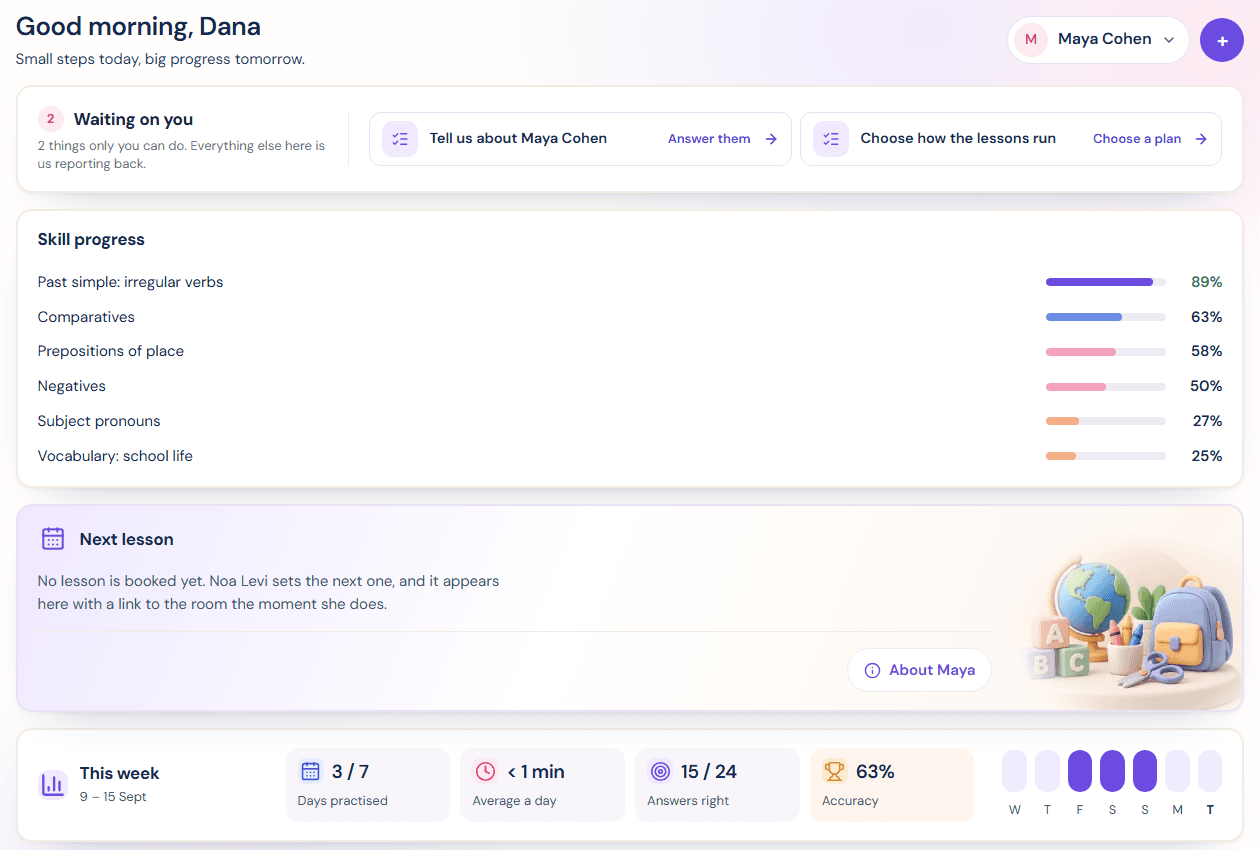
What a parent opens, and what is on it:
- Two things waiting on her — everything else on the page is TutorNest reporting back
- Skill progress, one line per skill, with how much of it is going in
- The next lesson, with the child's sign-in code the moment the room opens
- This week — days practiced, average minutes a day and answers right
The latest note from the teacher lands here too, in her own words, the moment she writes one up.
For teachers
Every child, and what practice showed
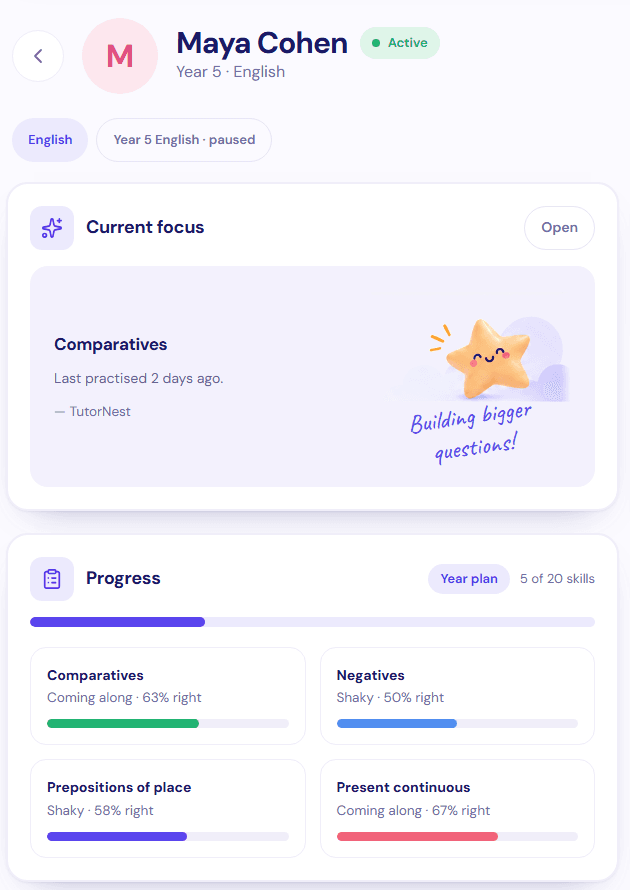
What a teacher opens, and what is on it:
- What needs attention today — the next lesson, and anything not yet written up
- Students, with the next lesson and how each one is doing
- A learning plan per child, written and adjusted by the teacher
- The lesson's own context, open beside the video
- Progress evidence: what practice actually showed since last week
See it with your own child.
Choose a plan and meet a teacher, or bring the teacher you already have.
New here? How TutorNest works walks through a week step by step, from the first lesson to the next one.